
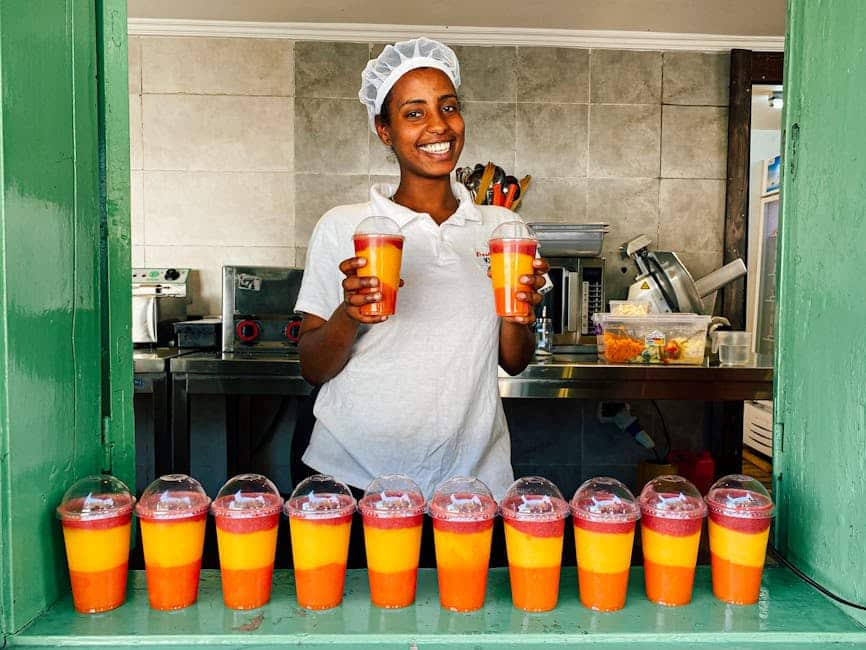
Looking to submit a Jamba Juice application? Jamba (formerly Jamba Juice) is one of the most popular smoothie and juice bar chains in the United States, operating over 850 locations across the country. Most Jamba locations are franchise-owned, meaning pay and specific benefits vary by operator. This guide covers how to apply, available positions, what to expect from the hiring process, and what makes Jamba a popular choice for first-time job seekers and students.
How to Apply for a Job at Jamba
Most Jamba locations accept applications online through the official Jamba careers portal or through the individual franchise operator’s hiring system. You can browse current openings at jamba.com/careers. For franchise locations, you may be redirected to the operator’s own application system. Additionally, walking into your local Jamba and asking to speak with the manager is effective for many franchise locations, particularly for crew member roles.
- Visit jamba.com/careers to find current openings near you.
- Select the location and role you want to apply for.
- Complete the online application with your availability, work history, and contact information.
- Submit your application and follow up with the store manager within a week if you have not heard back.
Jamba Job Positions and Pay
Jamba hires for team member, shift lead, and store manager roles. Because most locations are franchise-owned, pay varies significantly by operator and state. The table below reflects typical national ranges. California locations pay more due to state minimum wage laws.
| Position | Pay Range | Notes |
|---|---|---|
| Team Member / Crew | $13-$18/hr | Entry-level; blends drinks and serves customers |
| Team Lead / Shift Lead | $15-$20/hr | Supervises during a shift |
| Assistant Manager | $18-$24/hr | Supports daily operations |
| Store Manager | $40,000-$55,000/yr | Full store responsibility at franchise locations |
Pay at Jamba reflects state and local minimum wage laws. In California, where Jamba originated, team members typically earn $20-$22/hr under the state’s fast food minimum wage law. In lower-wage states, starting pay is closer to $13-$15/hr. Check your state’s current minimum wage at the U.S. Department of Labor.
Jamba Requirements
- Minimum age: 16 at most locations
- Experience: Not required for crew member roles
- Food handler certification: May be required by state; assistance typically provided
- Availability: Morning, afternoon, and weekend shifts common
Jamba Hiring Process
Jamba’s hiring process is fast and accessible. Most locations complete the process within 1-2 weeks of application for entry-level crew roles. The interview is typically one in-person conversation with the store manager, lasting 15-20 minutes. Questions focus on your customer service attitude, availability, and comfort working in a fast-paced blending environment. No prior smoothie or food service experience is required — the company provides full training for all new hires.
Jamba Interview Tips
- Emphasize your availability — particularly mornings, afternoons, and weekends, which are the busiest times for smoothie bars
- Show genuine enthusiasm for health, wellness, or the brand — Jamba hires people who fit its positive, energetic culture
- Dress business casual — clean dark jeans and a collared shirt or blouse is appropriate
- Be ready to talk about how you handle a fast, high-volume environment
- Ask about training — showing interest in learning demonstrates genuine engagement
Jamba Employee Benefits
Benefits at Jamba vary by franchise operator and employment status. Most locations offer free or discounted smoothies during shifts, which is one of the most commonly cited perks by employees. Some operators offer health insurance and paid time off for eligible full-time team members. Ask about specific benefits during the interview, as franchise operators set these independently.
- Free or discounted smoothies and juices during shifts
- Flexible scheduling — particularly accommodating for students
- Health insurance and paid time off at some franchise locations for full-time employees
- Career advancement to shift lead and assistant manager for strong performers
Why Jamba Is a Good First Job
Jamba consistently ranks as one of the more positive entry-level food service environments. The work is lighter physically than most kitchen roles — the core job is blending drinks and serving customers, not cooking over a grill or lifting heavy freight. The customer interactions tend to be positive since most people getting a smoothie are in a good mood. The pace during rush periods is fast but not as intense as a full-service restaurant kitchen.
For students in particular, Jamba’s flexible scheduling makes it a practical choice. Many operators actively accommodate class schedules and exam periods. The smoothie bar environment is also generally clean, well-lit, and upbeat — factors that matter a lot when you are spending 15-25 hours per week at a job.
What to Expect Your First Week at Jamba
Your first week at Jamba focuses on learning the menu, the blending process, and customer service standards. The Jamba menu is built around a core set of smoothie bases, boosts, and fresh juice combinations. Learning to build each drink to spec is the primary training focus. Most new team members work alongside an experienced crew member for their first few shifts before handling orders independently.
The Jamba environment is generally more relaxed than a full-service restaurant kitchen. The core work is blending, pouring, and serving — there is no grill cooking or complex food preparation. This makes it one of the more accessible entry-level food service jobs in terms of physical demands and learning curve. Customers at smoothie bars tend to be in a positive mood, which contributes to a generally upbeat workplace atmosphere.
Jamba vs Other Smoothie and Coffee Employers
If you are deciding between Jamba and a coffee employer like Starbucks, the key differences are menu complexity and pay. Starbucks has a significantly more complex menu and pays slightly more on average. Jamba has a simpler menu, a faster training curve, and a comparable culture. Both are strong choices for students and first-time workers. If coffee preparation appeals to you and you want stronger part-time benefits, Starbucks is the stronger option. If you prefer a juice and smoothie environment with a somewhat more relaxed pace, Jamba is a solid choice.
Comparing Jamba to McDonald’s or Taco Bell, Jamba generally offers a less physically intense work environment with a smaller menu and a customer base that skews toward wellness-oriented consumers. The trade-off is that Jamba has fewer locations — fewer than 900 compared to McDonald’s 14,000+ — meaning job availability varies more by market.
Frequently Asked Questions
Is it Jamba or Jamba Juice?
The company officially rebranded from Jamba Juice to Jamba in 2019. Both names are widely used. The brand is the same company.
How old do you have to be to work at Jamba?
16 at most locations. Some states allow 15-year-olds with work permits — confirm with your local store.
Does Jamba drug test?
Most franchise Jamba locations do not conduct pre-employment drug tests for entry-level positions.
How long does the Jamba hiring process take?
Most locations complete hiring within 1-2 weeks. Some franchise operators move faster for open positions.
Managing Your Money at Your New Job
Whether this is your first job or you are adding a part-time role to your schedule, managing your earnings matters from day one. Visit financebyclaude.com for budgeting guides, saving tips, and personal finance resources designed to help you make the most of every paycheck.
Jamba Pay vs Other Smoothie and Coffee Employers
If you are comparing Jamba to Starbucks, the two jobs have more in common than most people expect. Both involve preparing customized beverages to order, serving a health-conscious customer base, and working a fast-paced counter environment. Starbucks pays slightly more on average and offers stronger benefits for part-time workers, including medical insurance for those averaging 20 or more hours per week. Jamba’s menu is simpler and the training curve is faster, which appeals to candidates who want to get up to speed quickly.
Compared to fast food employers like McDonald’s or Taco Bell, Jamba offers a distinctly different work environment. The customer interactions at a smoothie bar are almost universally positive. People getting a smoothie or juice are typically in a good mood and not in the stressed rush that characterizes fast food drive-throughs. For first-time workers who find high-pressure customer service intimidating, Jamba is a more approachable starting point.
Working at Jamba as a Student
Jamba has a strong reputation as a student-friendly employer. Franchise operators who rely on a college-age workforce understand that class schedules change by semester, that exam periods require reduced hours, and that summer availability differs from the academic year. Most Jamba managers are accustomed to accommodating these patterns and actively build schedules around them.
The physical environment also suits students well. Shifts at a smoothie bar involve less physical strain than warehouse or kitchen roles. You spend your time blending, pouring, and conversing with customers rather than lifting freight or working over a hot grill. The store environment is typically clean, air-conditioned, and bright. These are meaningful factors when you are balancing work with academic demands and need a job that does not leave you too exhausted to study afterward.
For students interested in health, nutrition, or hospitality as a career direction, Jamba provides relevant experience and natural conversation points for future job applications. Working at a health-focused brand signals something different to employers than a generic fast food job. If your longer-term interests lie in wellness, fitness, or food service management, Jamba is a more strategically relevant first step than most entry-level options.
Jamba Franchise Locations vs Corporate Locations
Like most smoothie and juice chains, the majority of Jamba locations are franchise-owned. This means the specific pay, benefits, and management quality at your local Jamba depend heavily on the individual operator. Before applying to a specific location, it is worth spending a few minutes reading employee reviews on Indeed and Glassdoor filtered to that location or city. Franchise-operated locations with strong management tend to have lower turnover and better team culture. Locations with high turnover or complaints about scheduling are worth noting before you invest time in an application.
One practical advantage of working at Jamba that often goes overlooked is the product knowledge you develop. Understanding nutrition, ingredient combinations, and dietary preferences gives you skills and vocabulary that are genuinely useful in health, wellness, and hospitality careers. If you are a student pursuing a degree in nutrition, health sciences, or food service management, working at Jamba gives you daily practical context for what you are learning in class. This kind of applied experience makes your resume more compelling and your coursework more tangible.
The role also builds strong multitasking skills that transfer broadly. During a lunch or afternoon rush, a Jamba team member juggles multiple orders, tracks blending timelines, handles payment, and maintains a clean workspace simultaneously. Employers in virtually every industry recognize these coordination abilities. Many former Jamba employees report that their ability to stay calm, organized, and customer-focused under pressure — skills developed at the smoothie bar — became talking points in interviews for unrelated roles years later.
If you are unsure which Jamba location to apply to, look at store hours and customer volume as signals of management quality. High-volume locations in well-trafficked shopping centers tend to be better managed because the revenue justifies investing in good operators and stable staff. Lower-volume locations may have more variable management quality. Reading recent employee reviews on Indeed filtered by city gives you a useful baseline before you invest time applying. Taking 15 minutes to research the specific location before you apply is time well spent and can save you from joining a poorly run store.